
 Many people assume that losing a tooth mainly affects their smile. However, the most significant changes often happen beneath the surface. When a tooth is lost, the jawbone in that area no longer has the support it needs. Over time, the body begins to break down bone that it no longer needs. In fact, noticeable bone loss can begin within the first year after tooth loss. Fortunately, our expert implant dentist in Jacksonville, FL can help you avoid bone loss and keep your jaw healthy!
This article explains how dental implants can help protect the health and strength of the jawbone to support a healthier, more comfortable smile long-term.
Many people assume that losing a tooth mainly affects their smile. However, the most significant changes often happen beneath the surface. When a tooth is lost, the jawbone in that area no longer has the support it needs. Over time, the body begins to break down bone that it no longer needs. In fact, noticeable bone loss can begin within the first year after tooth loss. Fortunately, our expert implant dentist in Jacksonville, FL can help you avoid bone loss and keep your jaw healthy!
This article explains how dental implants can help protect the health and strength of the jawbone to support a healthier, more comfortable smile long-term.
Understanding Bone Loss
The jawbone shrinks after tooth loss due to a process called bone resorption. While many of us think of our bones as being solid and stable, they’re actually active tissues that constantly (if slowly) change shape throughout our lives. We have a type of cell (called osteoclasts) that break down bone tissue and another type of cell (called osteoblasts) that build it up. These cells work together to keep our skeletal system healthy and allow bones to heal after being broken or fractured. The body’s ability to break down and resorb bone tissue is critical to maintaining skeletal health. This is what keeps hollow areas like bone marrow space and nerve canals the right size and shape and releases calcium for our bodies to use. Unfortunately, this normally healthy process can have less desirable consequences when we lose teeth.Why Does the Jawbone Shrink After Tooth Loss?
Your teeth do more than help you chew food. They also play an important role in maintaining the strength of your jawbone. Every time you bite or chew, the roots of your teeth stimulate the surrounding bone. This stimulation signals the body to keep the bone strong and healthy. When a tooth is lost, that stimulation disappears. This does not necessarily increase osteoclast activity (which breaks down bone tissue), but it does suppress osteoblast activity (which builds the bone up again). Over time, this leads the jawbone to shrink. Bone loss in the jaws can lead to:- A weaker jawbone
- Changes in the alignment of nearby teeth
- Difficulty placing dental implants later
- Increased risk for gum recession
- Changes in facial appearance
How Dental Implants Help Prevent Bone Loss
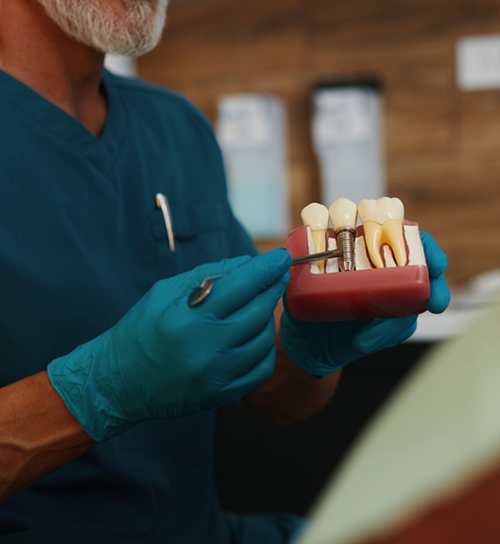
Dental implants are the only tooth replacement option that replaces the root of a missing tooth. During implant surgery, we place a small titanium post into the jawbone where the tooth root used to be. The post then fuses to the supporting bone in a process called osseointegration. Once healed, the implant becomes part of the jaw’s structure and can support a crown, bridge, or other restoration. Because implants function like natural tooth roots, they restore the stimulation the bone needs during chewing and prevent bone loss. For patients considering a tooth implant in Jacksonville, this root replacement is one of the most important advantages of dental implants. It helps maintain bone density and supports the long-term health of the jaw.How Implants Help Preserve Facial Structure
Dental bone loss doesn’t just affect oral health. It can also change the shape and appearance of your face. When the jawbone shrinks, the lower portion of the face may begin to lose support. Over time, this can cause:- A sunken or collapsed appearance around the mouth
- Thinner-looking lips
- A shorter distance between the nose and chin
- Changes to the jawline
- Sagging or wrinkled skin around the mouth and jaw
- Sunken cheeks
- Reduced chin prominence